Design System team to the Rescue!
Pluto TV is a free internet television streaming service owned and operated by Paramount Streaming, a division of Paramount Global. It offers hundreds of live channels of content gleaned from partners and ‘net sources as well as On Demand hit movie cult classics, blockbuster films.Pluto TV makes money by showing commercials within the video content or when switching between channels.
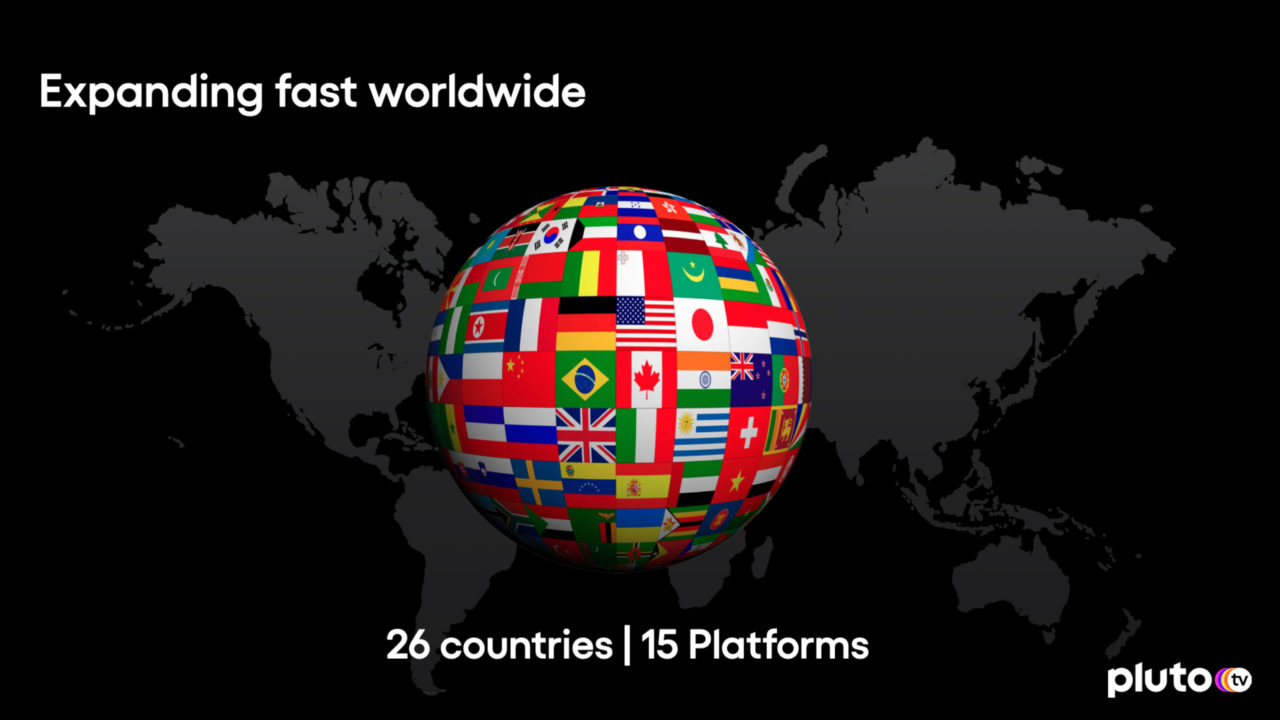
Pluto’s TV Design system team is aiming in creating a multi-platform self-serve frictionless self-explanatory product, so our teams can create simple, intuitive, and beautiful experience for our users in 26 countries and over 15 platforms.
A Design System isn’t a Project. It’s a Product, Serving Products. This is a marathon, not a sprint. Design systems are everybody’s business.It’s important to keep in mind that a Design System is never really “done”; it will grow and evolve just like any other product.
By ensuring that the right governance processes are in place, our teams can understand when and how to best introduce new elements into the system.
Services
Design System Vision Implementation
Design System Roadmap
Qualitative Research
Interviewing, Hiring
Information Architecture
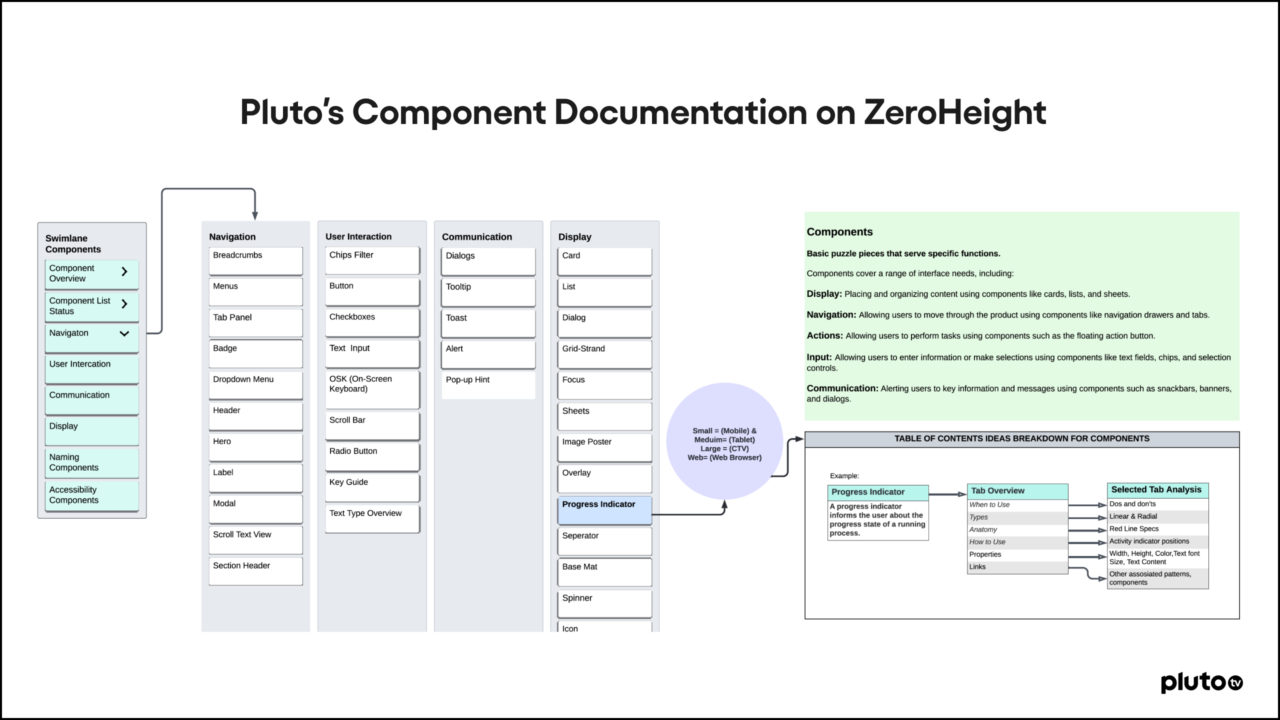
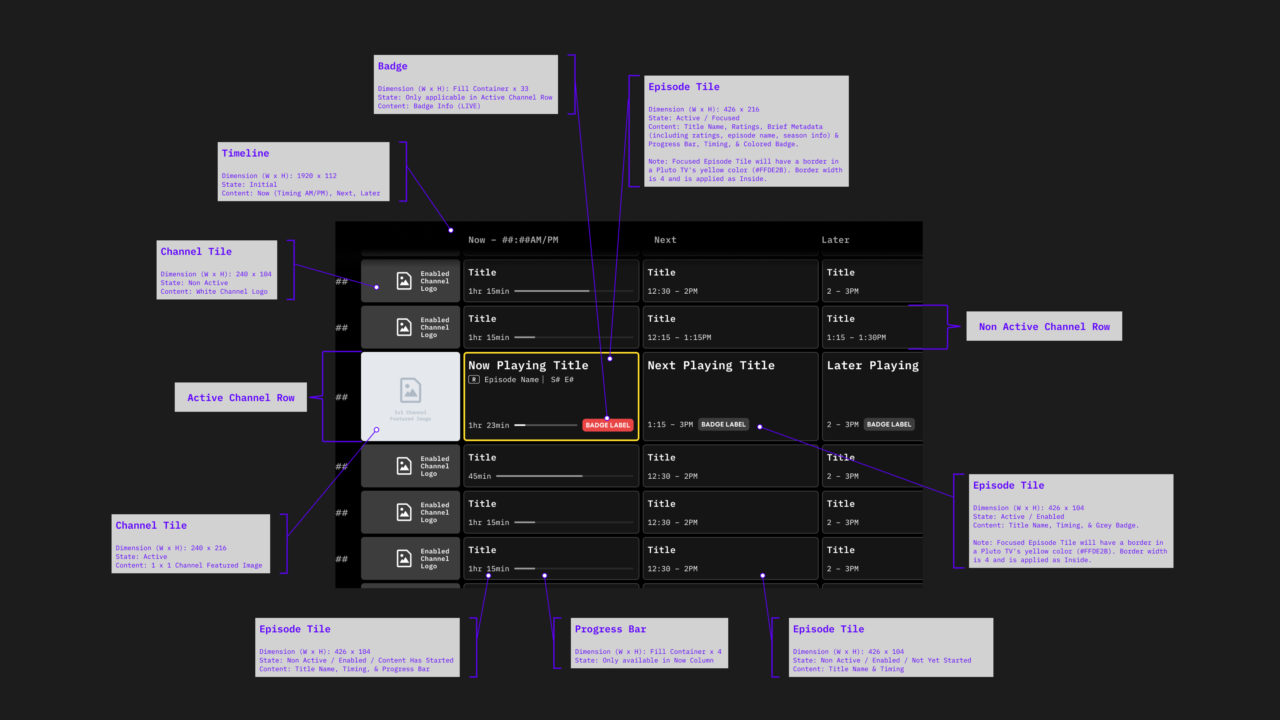
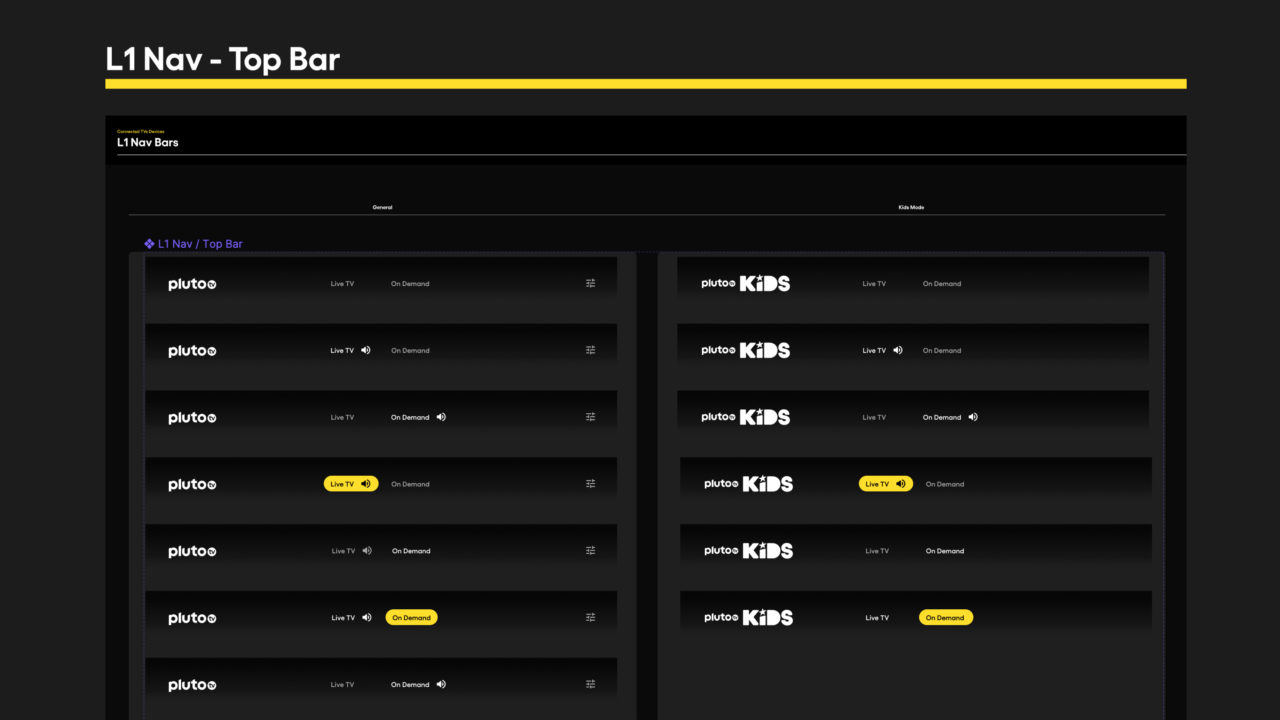
Component Documentation
DS Competitive Benchmarking
Governance Workflow Processes
More duties below…
Role: Design System Manager
Org: Paramount / Pluto TV
PM: Agile/Scrum Ceremonies
Year: 2022
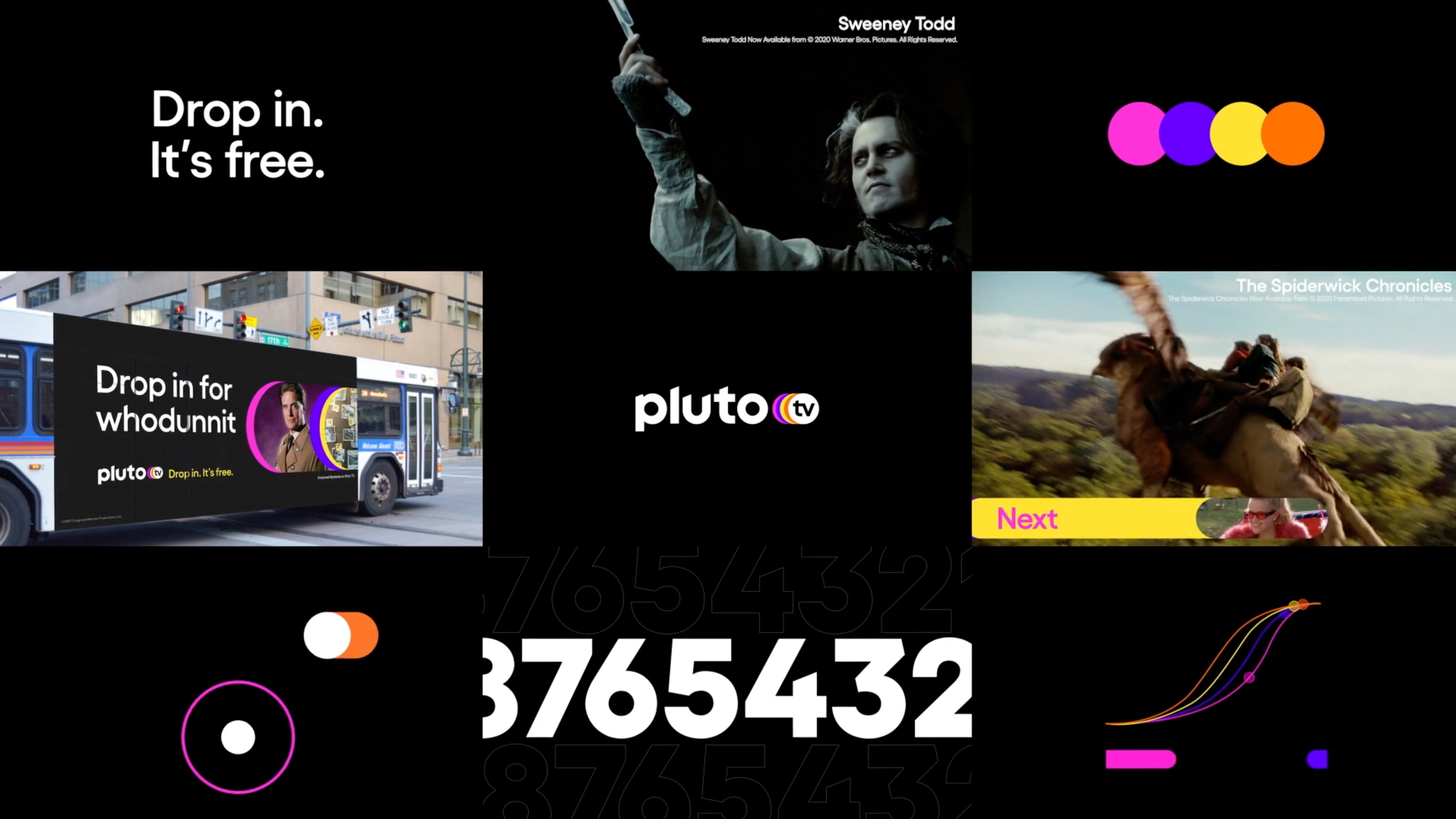
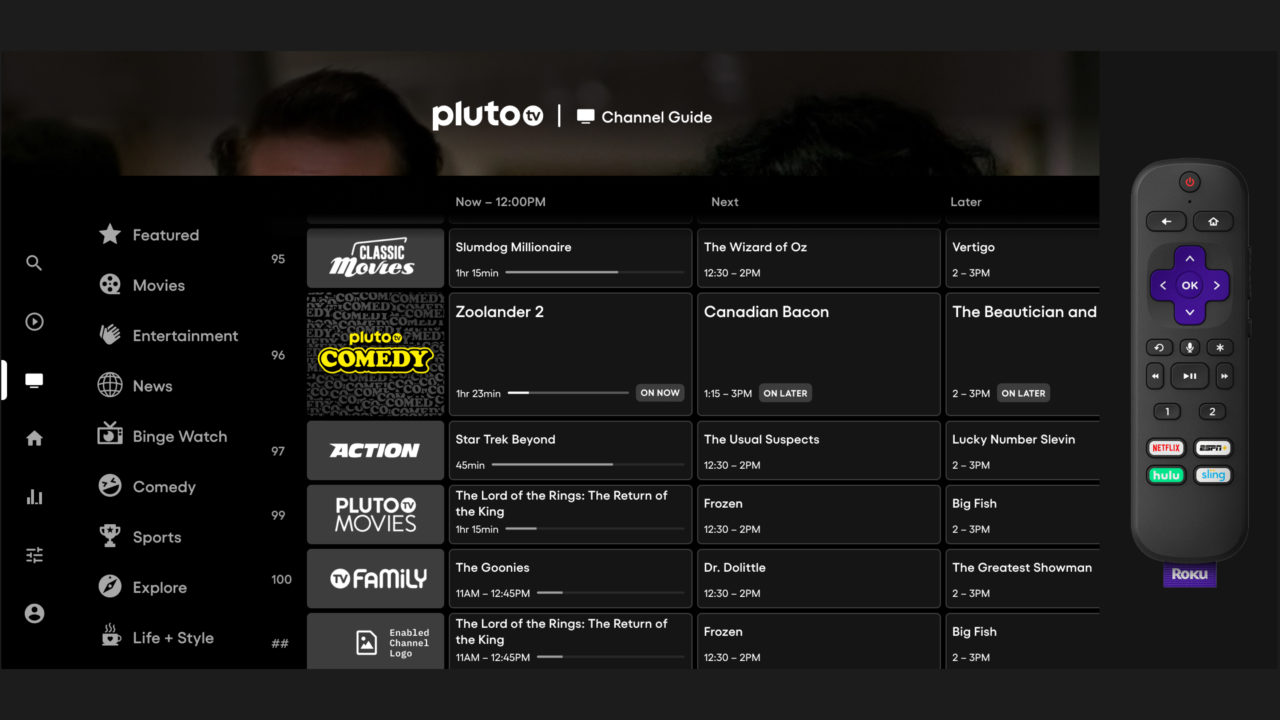
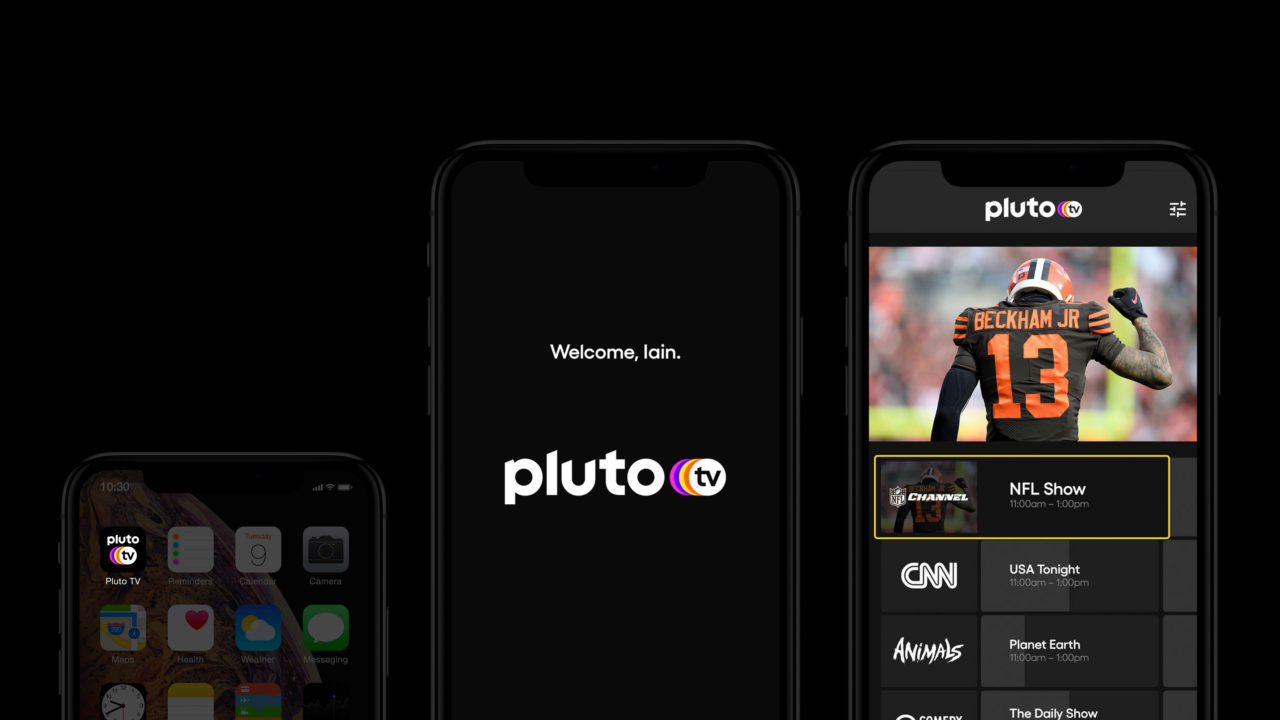
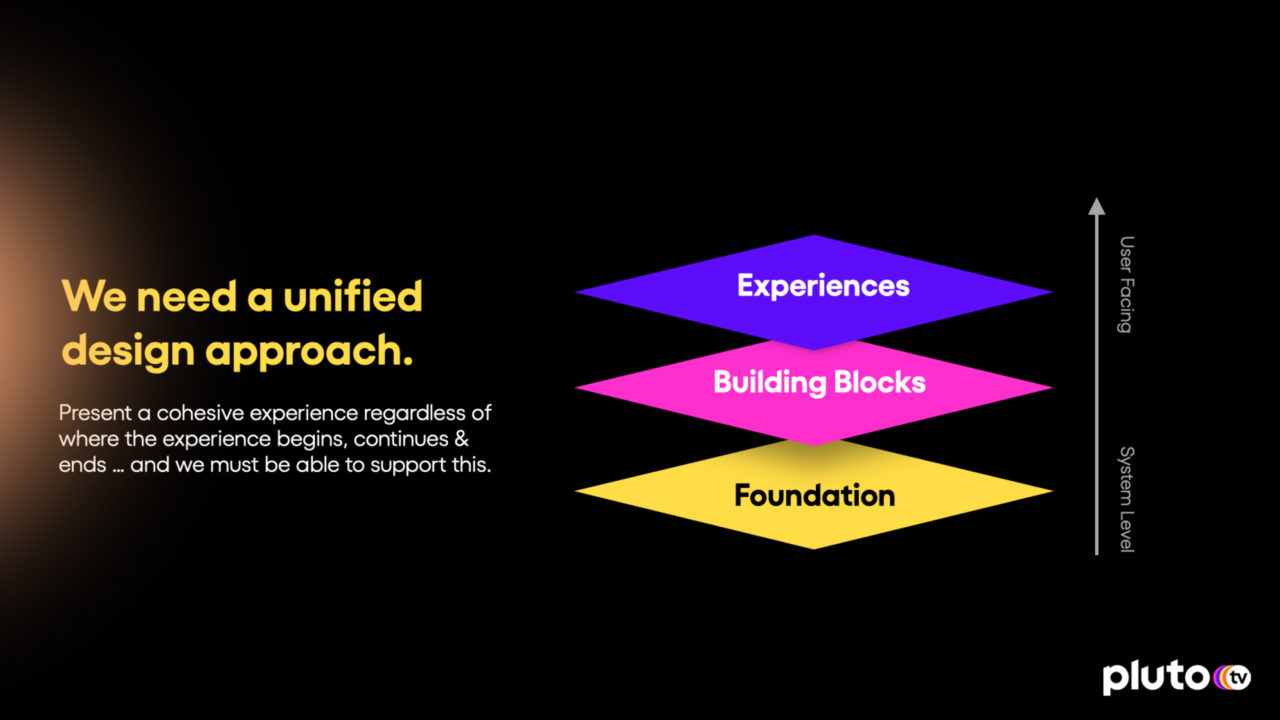
A Design System for all platforms. We believe that people should have a high-quality experience that effortlessly scales across platforms( Desktop, Mobile, Connected TVs, Wearables, Car infotainment Systems, Foldable Devices) to do so, we need a reliable multi-platform Design System in place that clearly communicates our principles, guidelines, UI interactions, components, patterns, design elements to all our teams involved in creating consistent experiences across devices for our global audience.
What is a Design System?
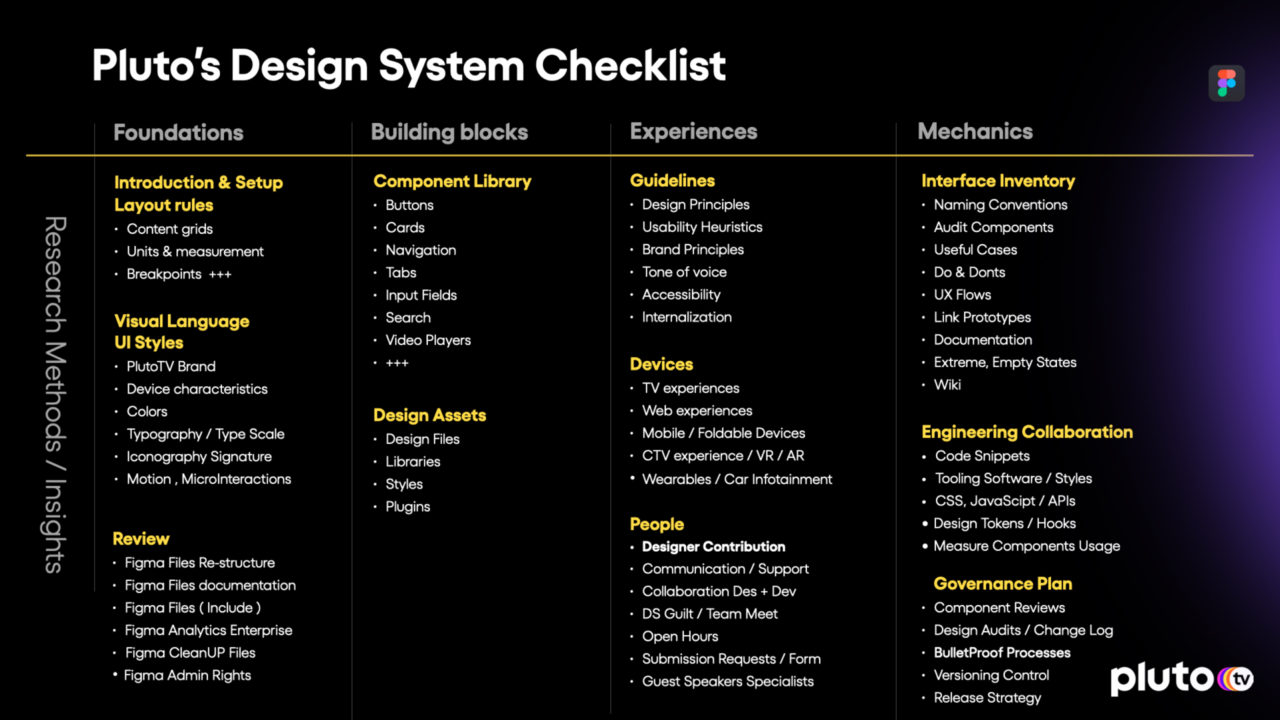
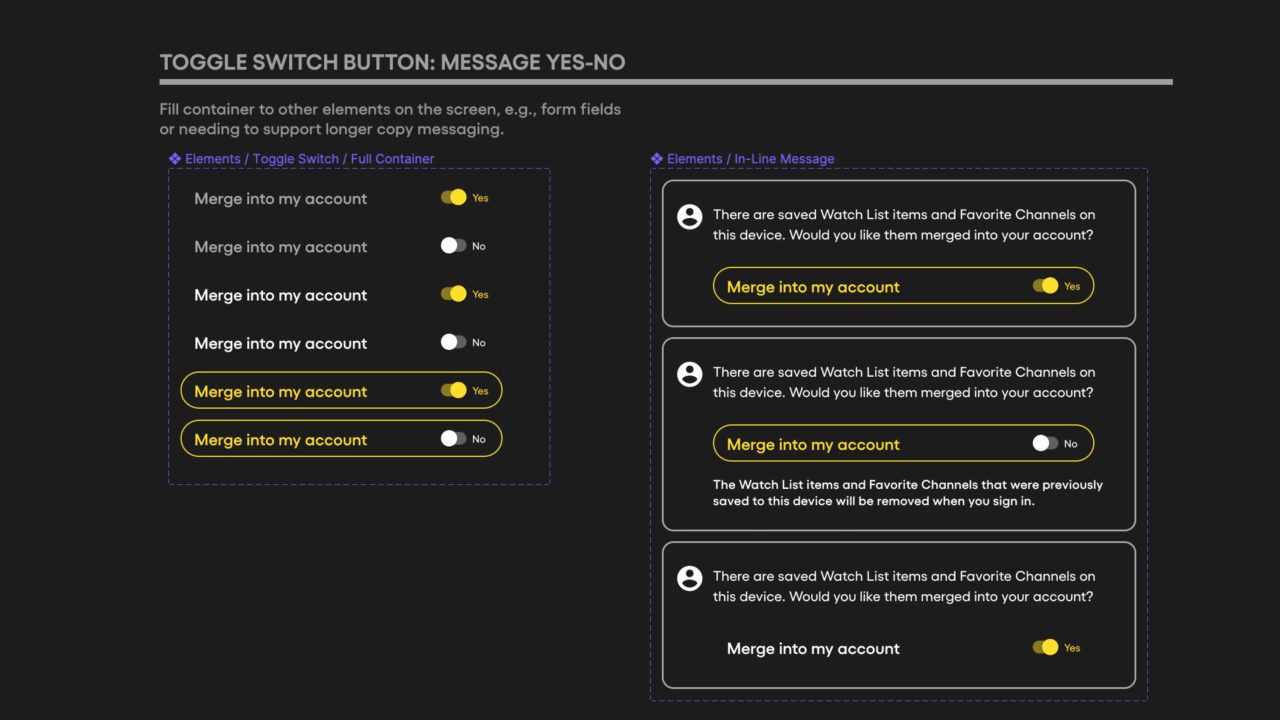
A design system is a complete set of standards intended to manage design at scale using reusable components and patterns. A design system initiative has a lot of moving parts.
Why do we need a Design System?
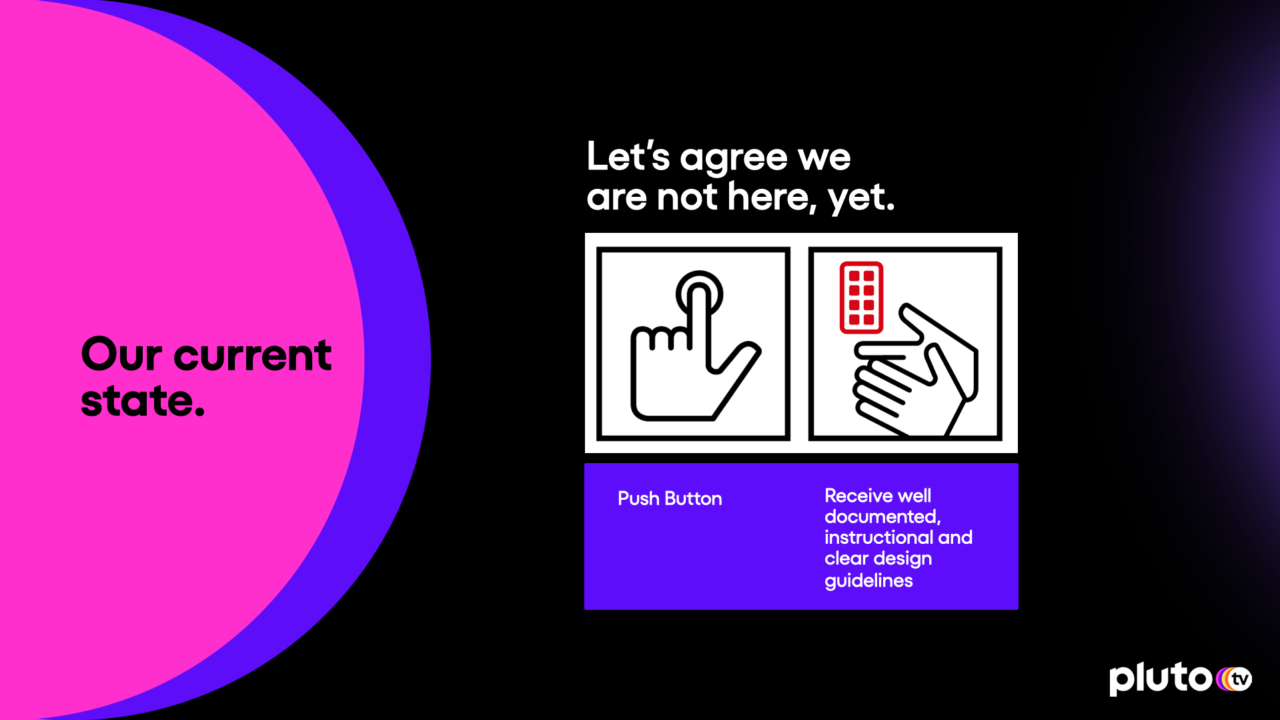
To create alignment within our teams, there must be a single shared source of truth. A place to reference official patterns, styles, components, documentation
Help inform our cross-functional teams about how our components should look and behave, and allow each team to concentrate on the unique value they can bring to the user, and create a consistent user experience
Eliminating redundant work will allow our teams ( design & engineering ) to increase our velocity and keep us on budget by keeping our design and code overhead low. Help us implement our service to other platforms ( Wearables, Car-Infotainment, VR )
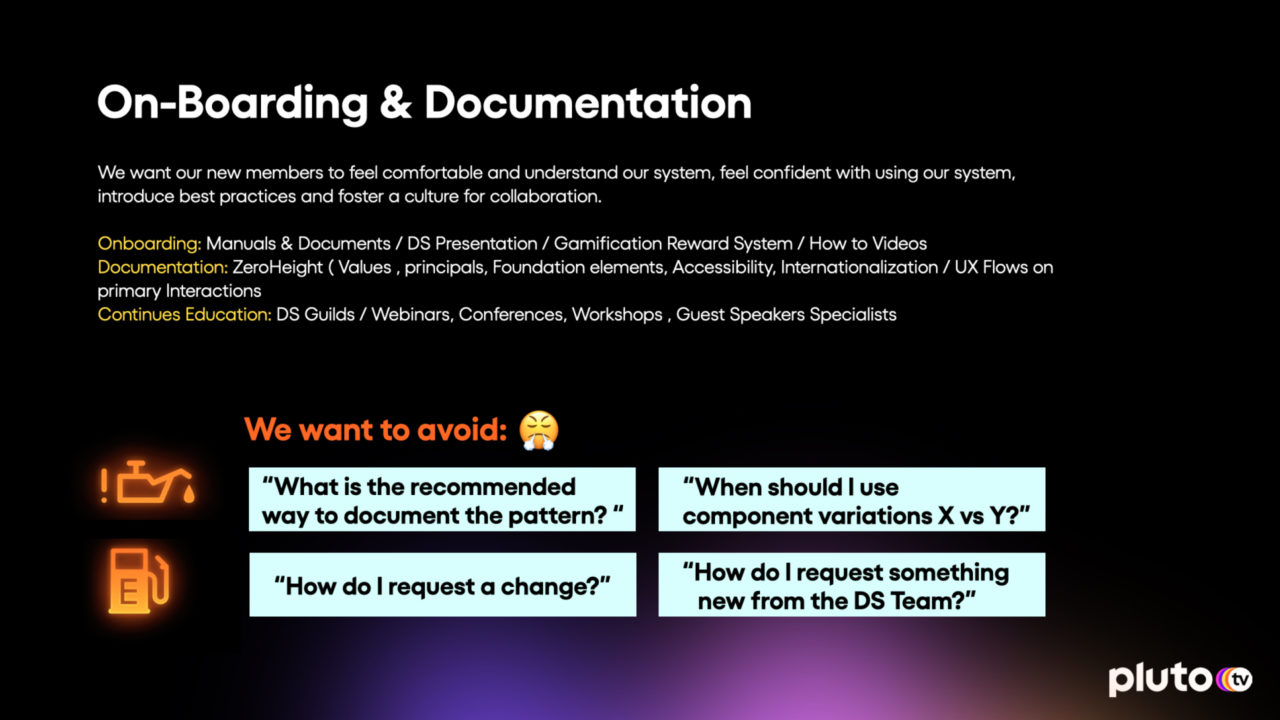
Assist new talented people with onboarding and becoming productive as fast as possible.
Design System Business Objectives / KPIs
Measure continuous improvement how long it takes teams to build a new product using the organization’s design system.
Reduce design-related issues in the maintenance Jira bucket backlog.
Track the number of components so we can track what is used where.
Another great metric to see how our components stand in time through the design process is measuring the number of attached components still in ( JITS – Final Figma files handed over to engineers). That is a great indicator because there’s no reason why there should be detached instances of components when arriving at the hand-off phase.
Reduce time to rolling out a resolution for accessibility issues across devices.
Business Goals:
Reduce Tech Debt, Faster time to market, Less time spent in QA
Desired Outcomes:
Encourage Innovation, Consistent & Efficient design, Shared Vocabulary Understanding, Scale across platforms
My Role as Pluto’s TV Design System Manager
My focus is on the whole design systems process, from establishing a practice and vision that endures to designing, building, documenting, and maintaining DS libraries used by the product teams. More specifically:
- Led the visual and technical direction of the design system, visual style, documentation, technical tooling, as well as processes, contribution, and creation of support channels.
- Interviewed, hired, and created a high-performing design systems team.
- Presented the design system’s mission, libraries, and process to new members, other groups, including product managers, content specialists, QA, and other design and development teams throughout the enterprise.
- Negotiated and clarified staff capacity for system work relative to other commitments to deliver releases at a predictable velocity. Accountable for Design system Roadmap and Jira ticket backlog.
- Decisively resolved priorities, timing, risks, task importance, and possible breaking changes. Delivered design system releases in a predictable sequence.
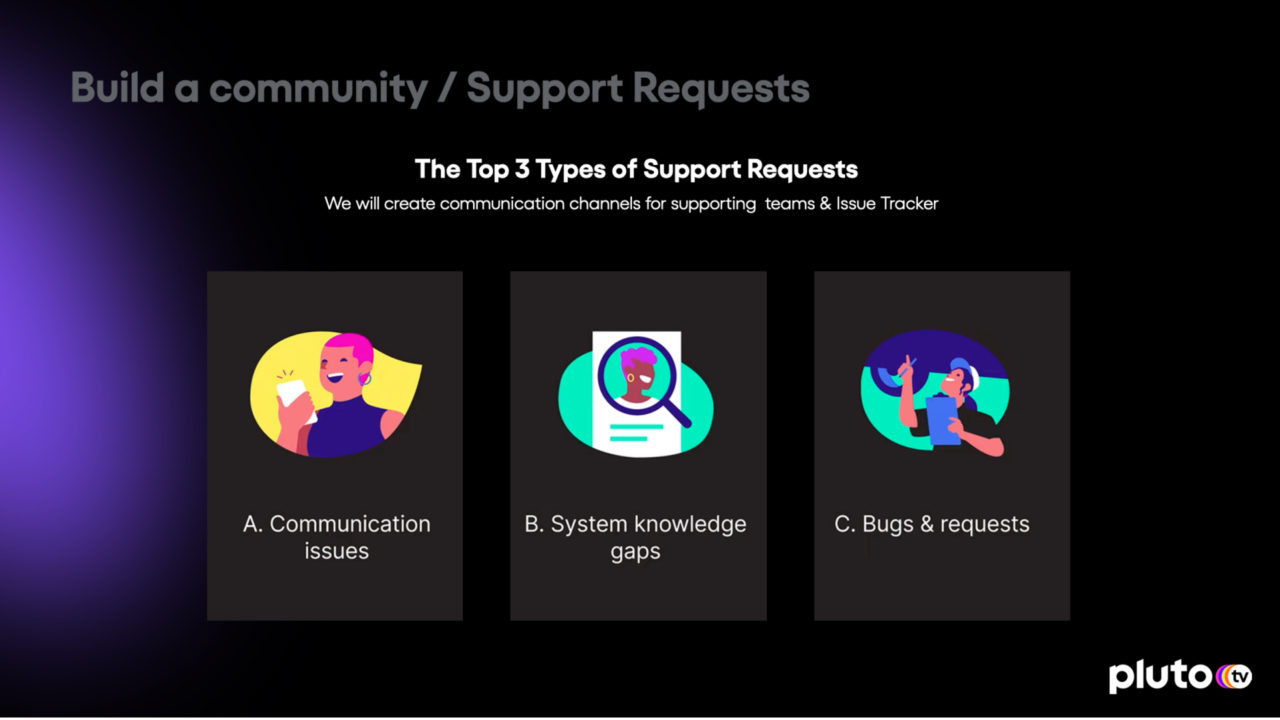
- Created communication support channels/workshops/accessibility compliant.
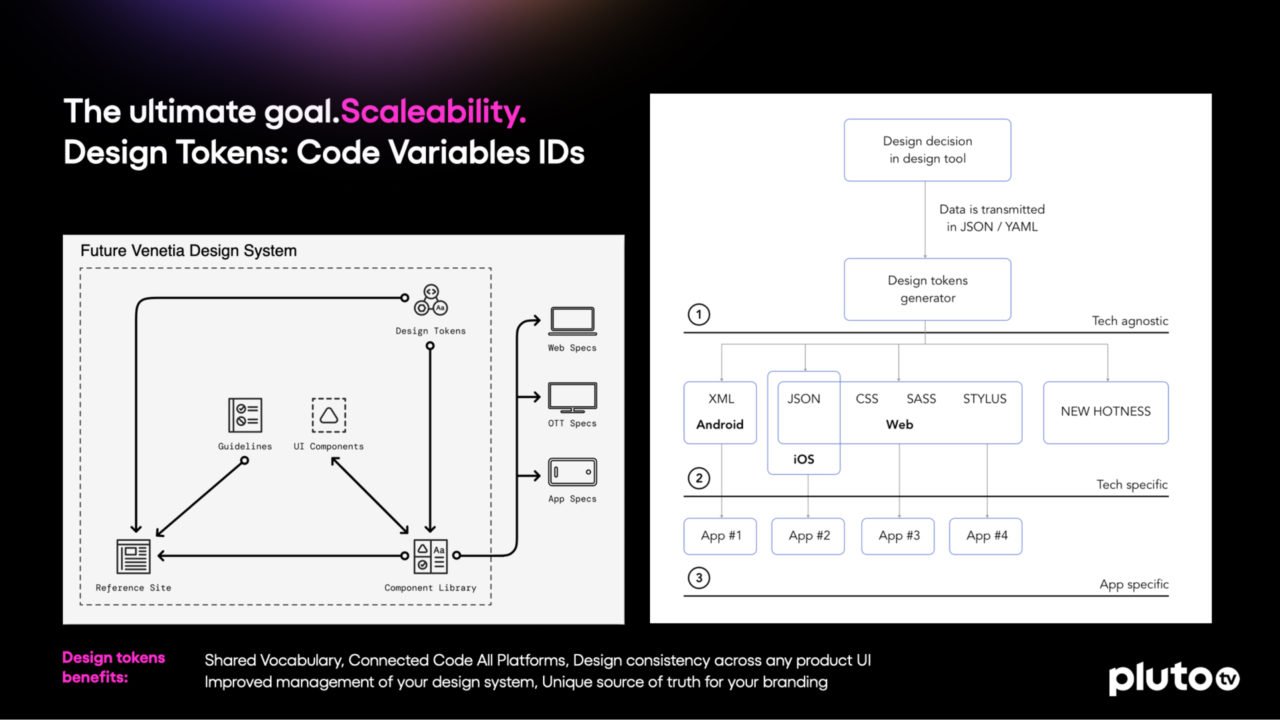
- Built connections with developers and start introducing the idea of Design Tokens, Hooks, and a commonplace to view built components in isolation front end development ( Storybook.js, Style Dictionary ). Start a discussion on how we can fully scale and integrate our DS into all our platforms harmoniously. Component API-level/Bridge.
- An active member of Paramount’s Design system committee. Participants CBS Sports, Paramount +, Showtime, Pluto TV
My Hands-on involvement with the Design System
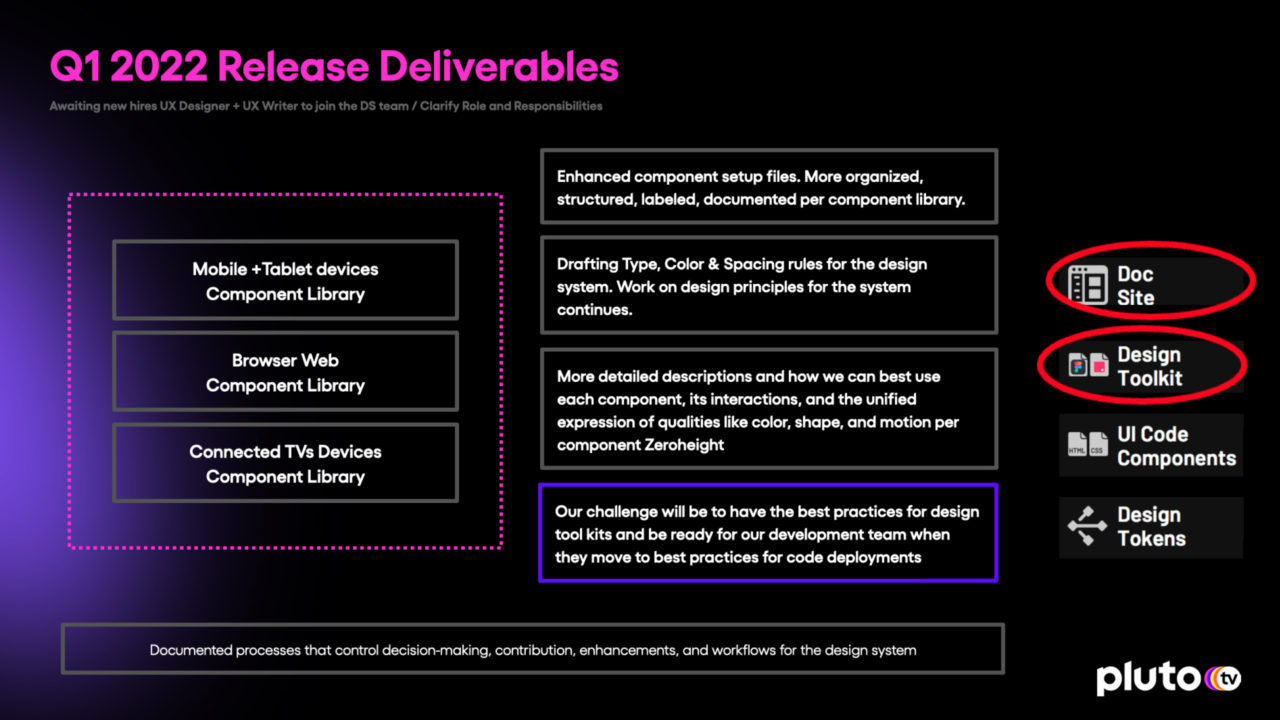
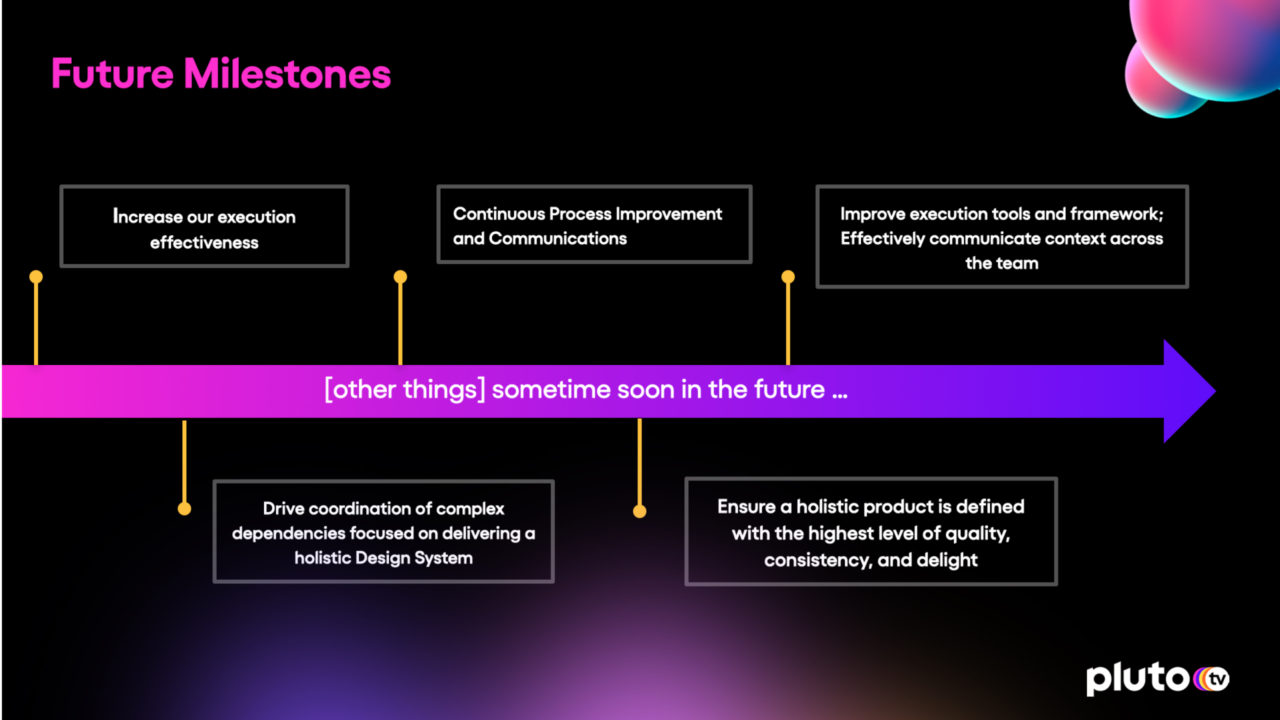
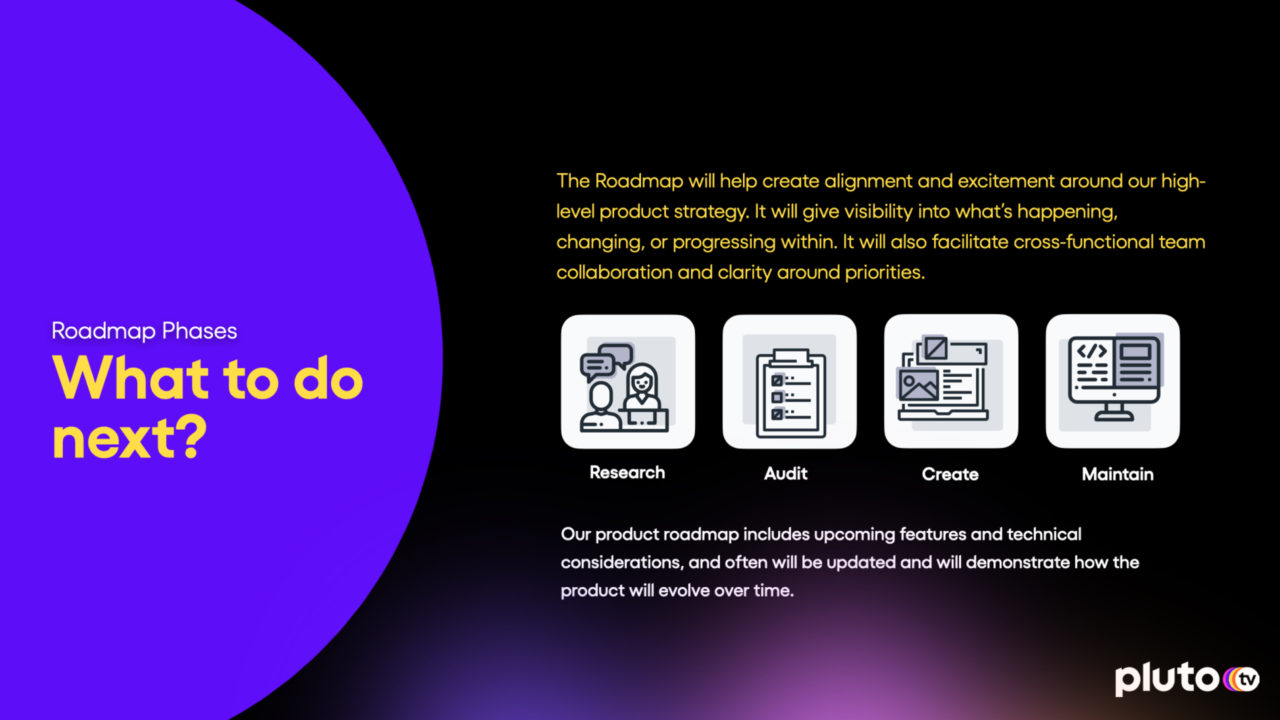
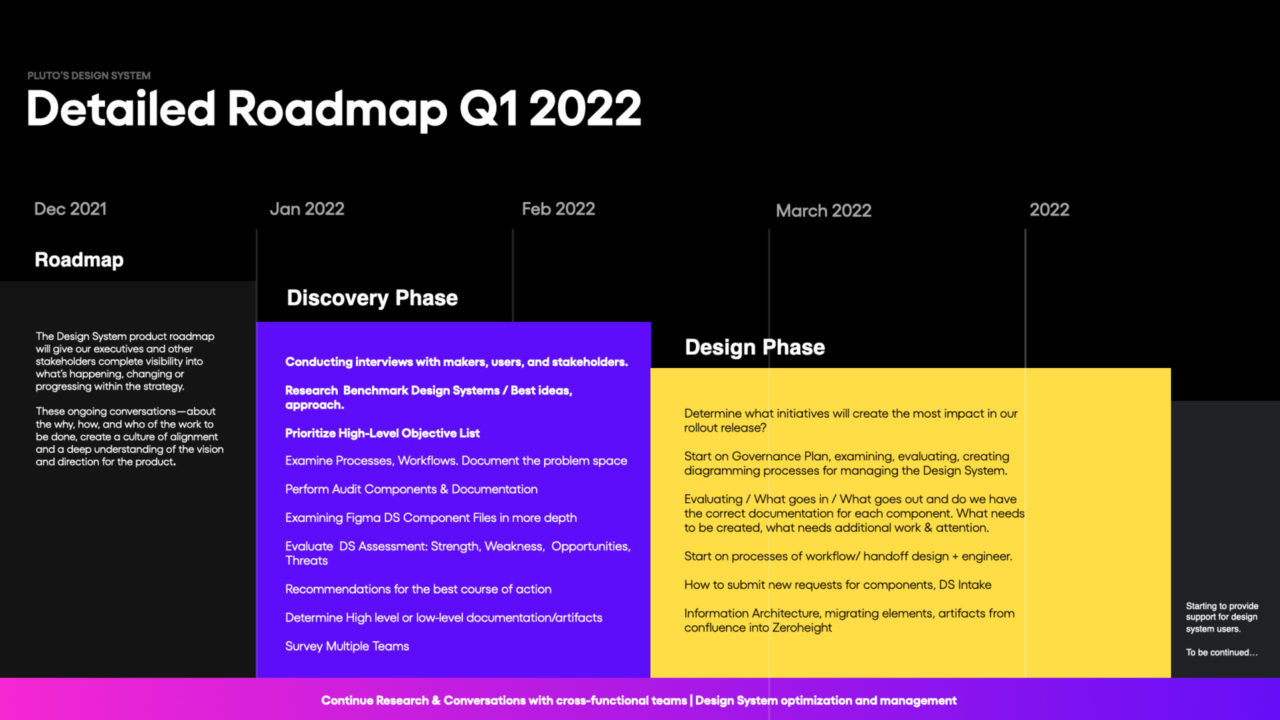
- Creation and implementation of Pluto’s TV Design System Roadmap. The roadmap will help us create alignment and excitement around our high-level product strategy. It will give visibility into what’s happening, changing, or progressing within. It will also facilitate cross-functional team collaboration and clarity around priorities.
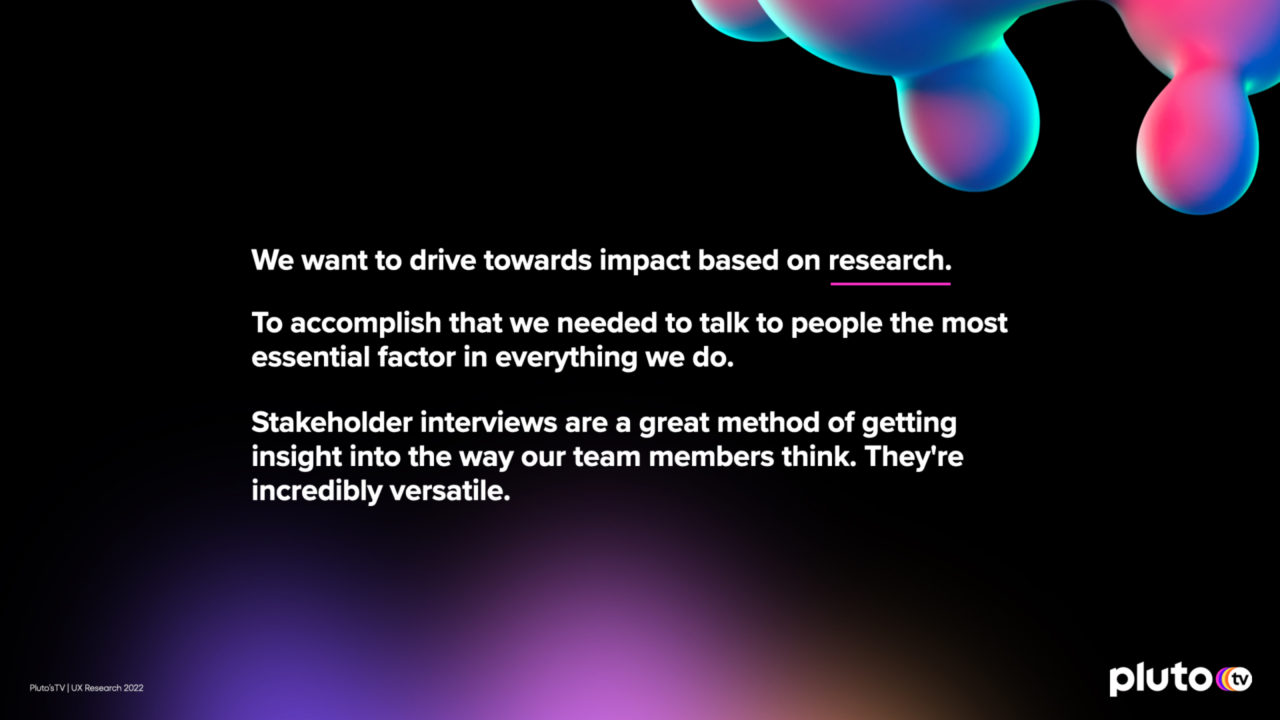
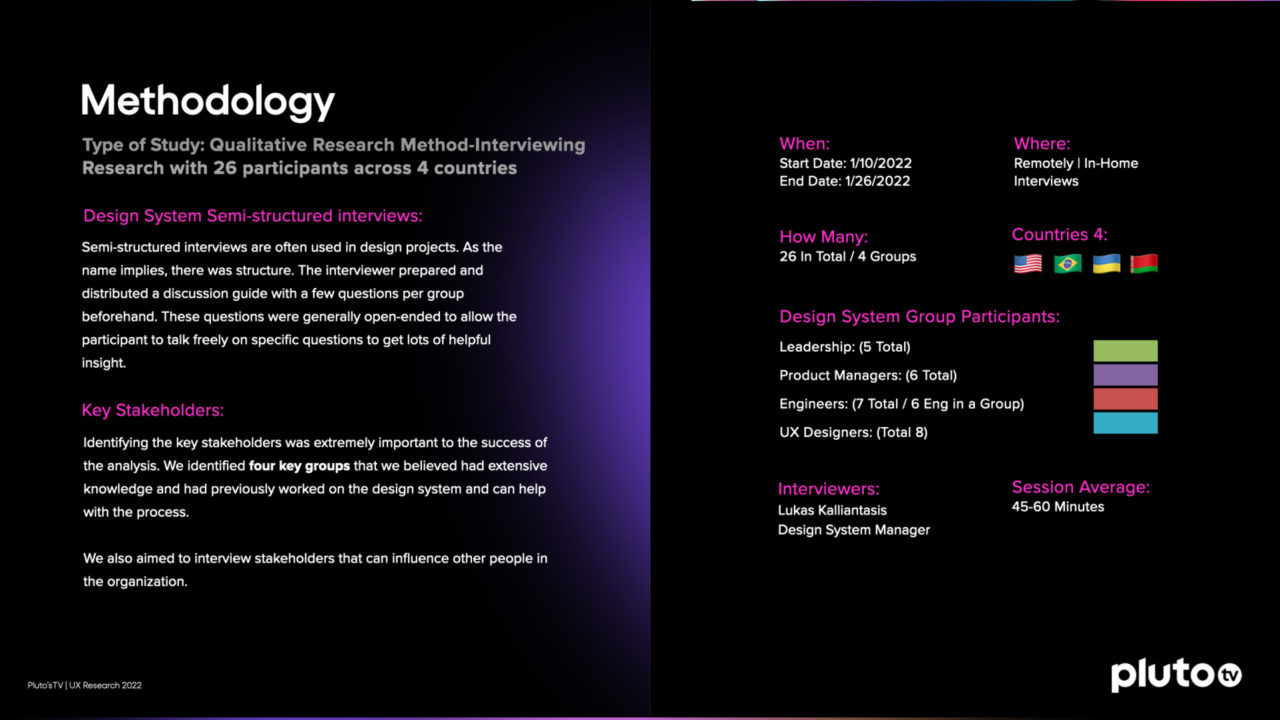
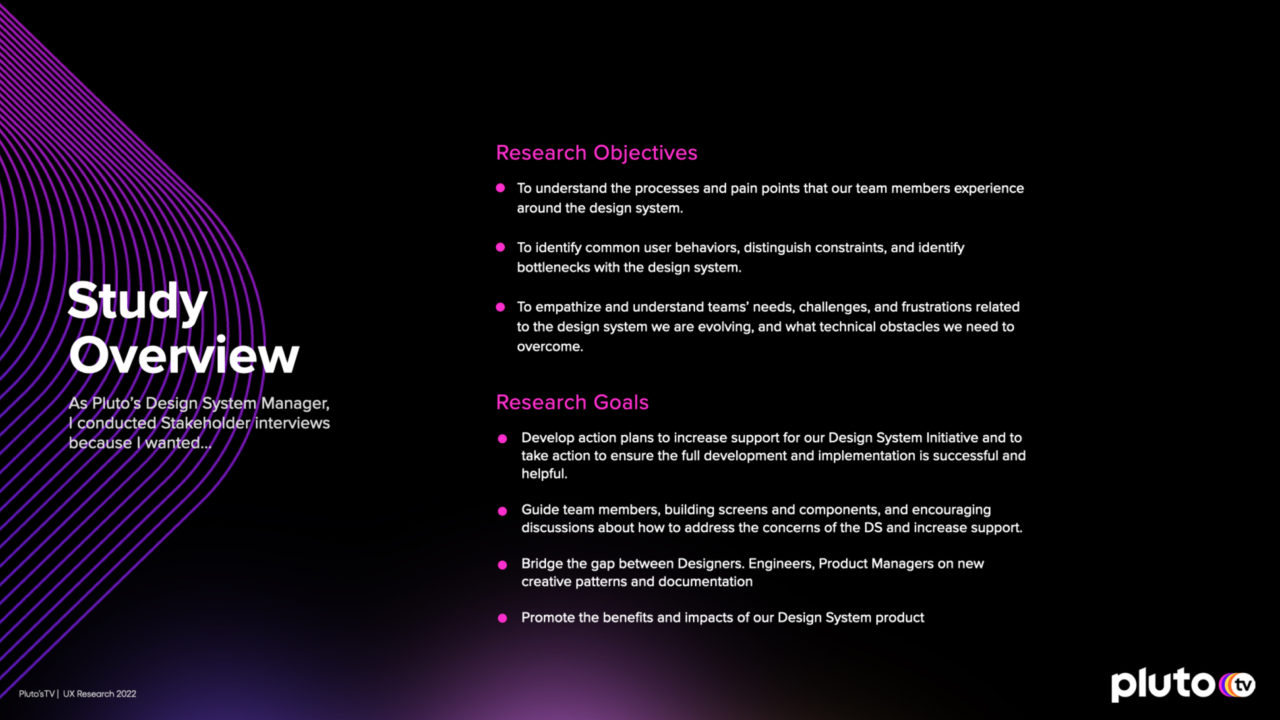
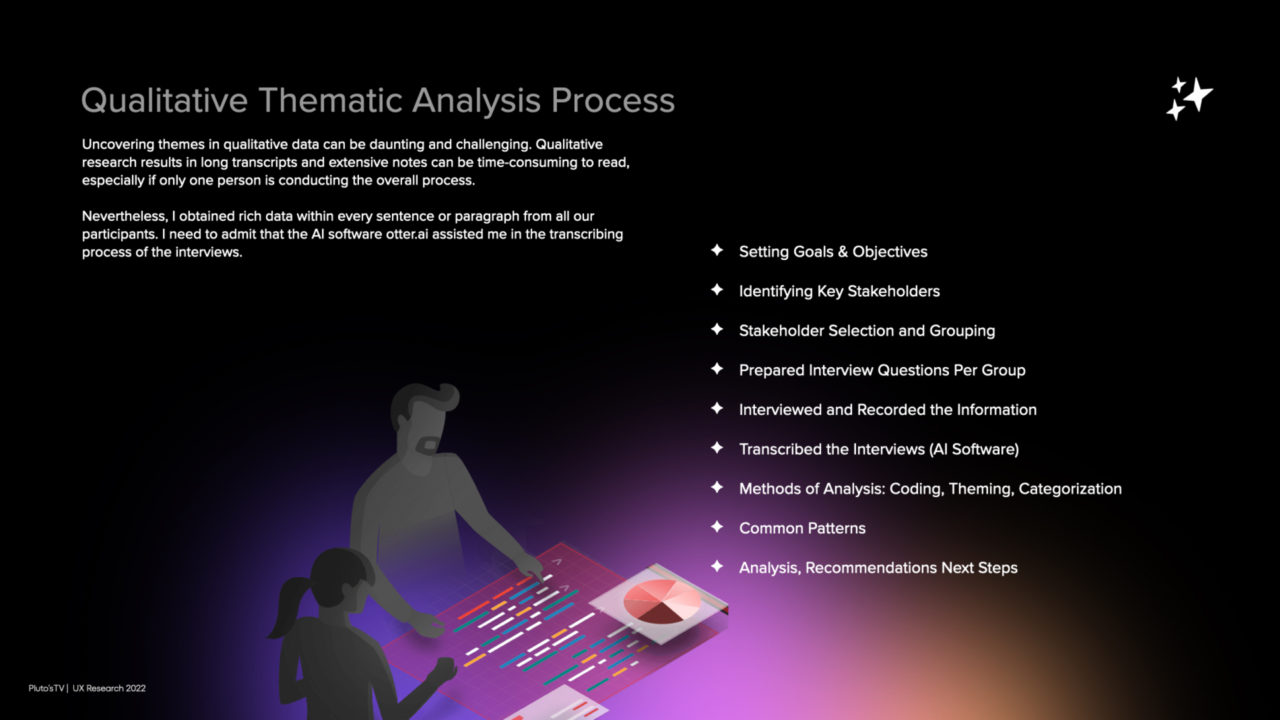
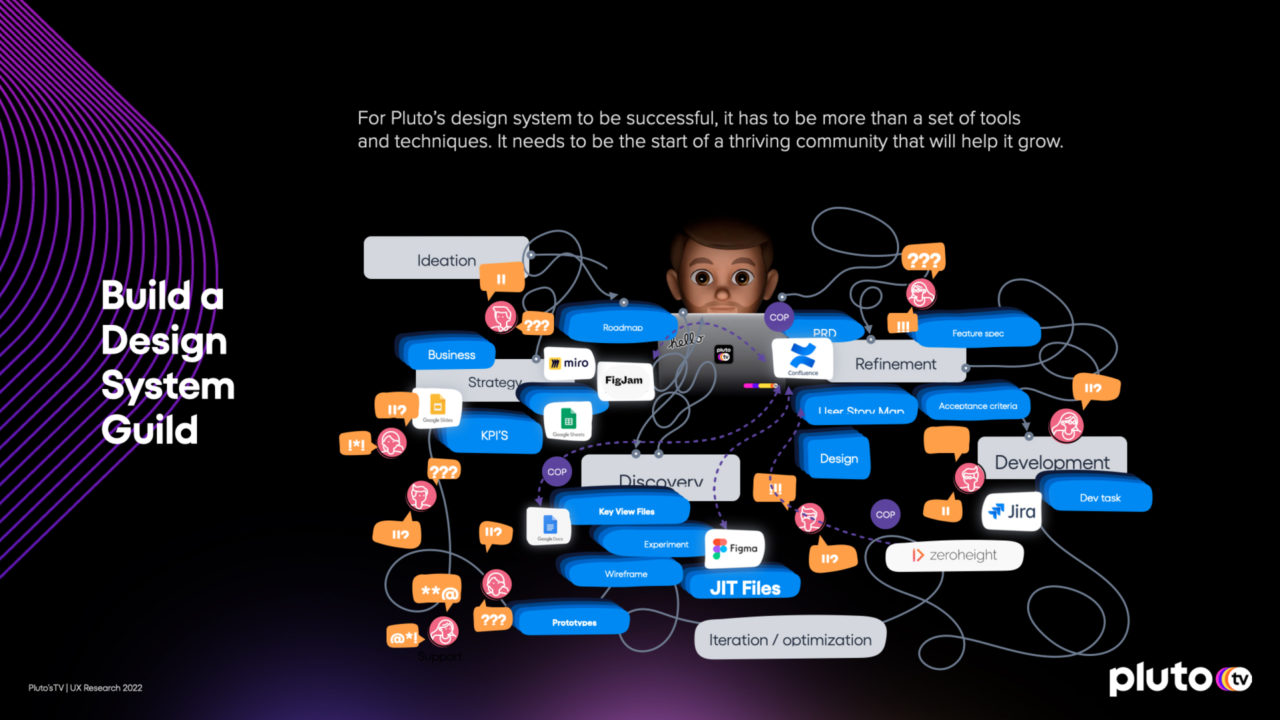
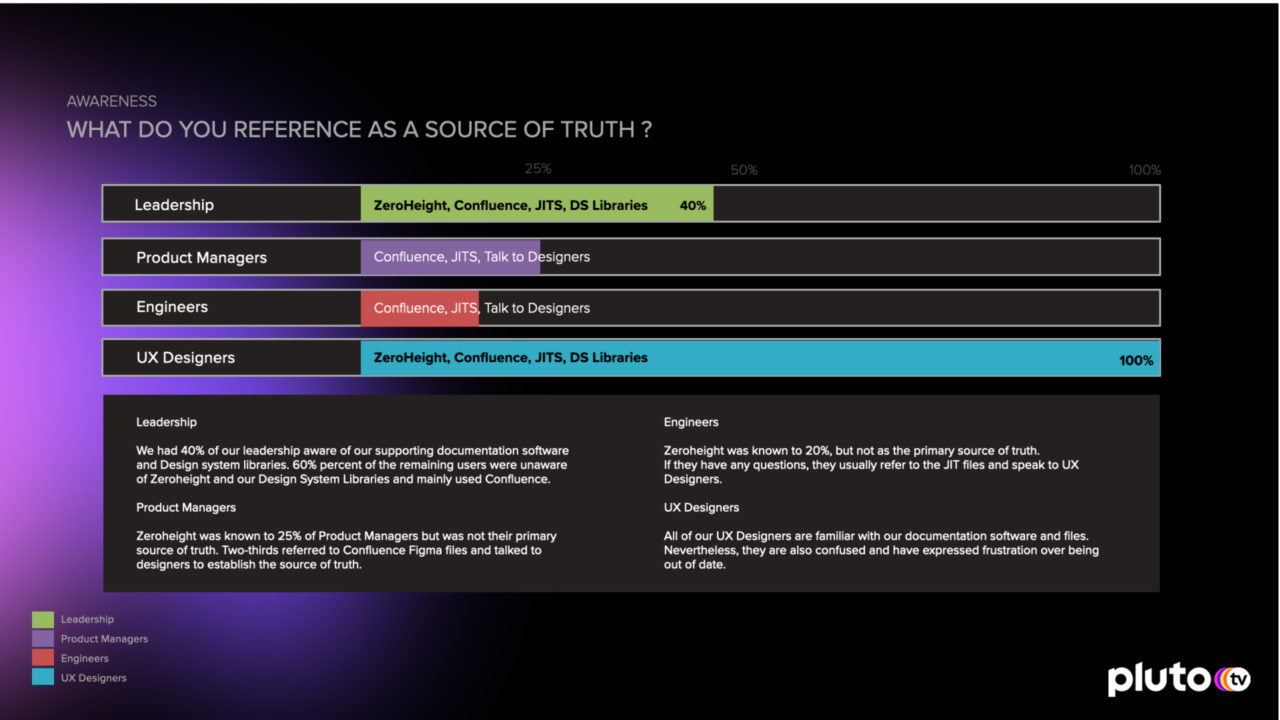
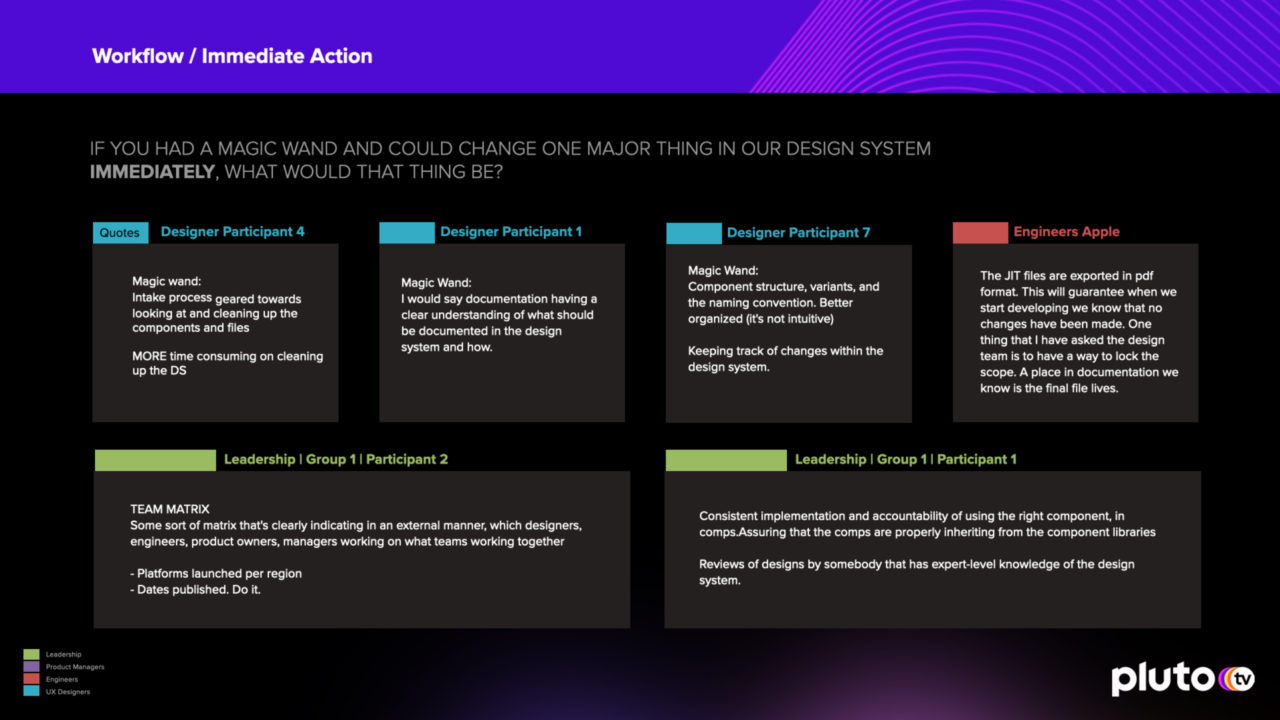
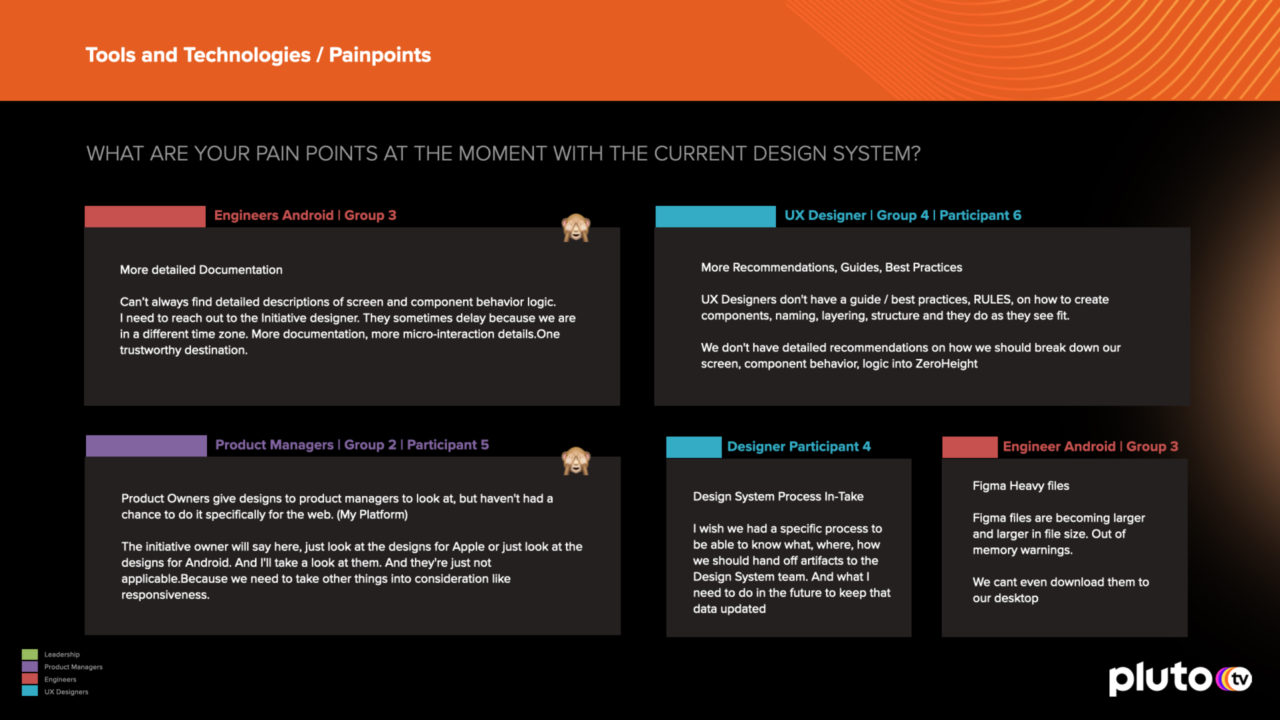
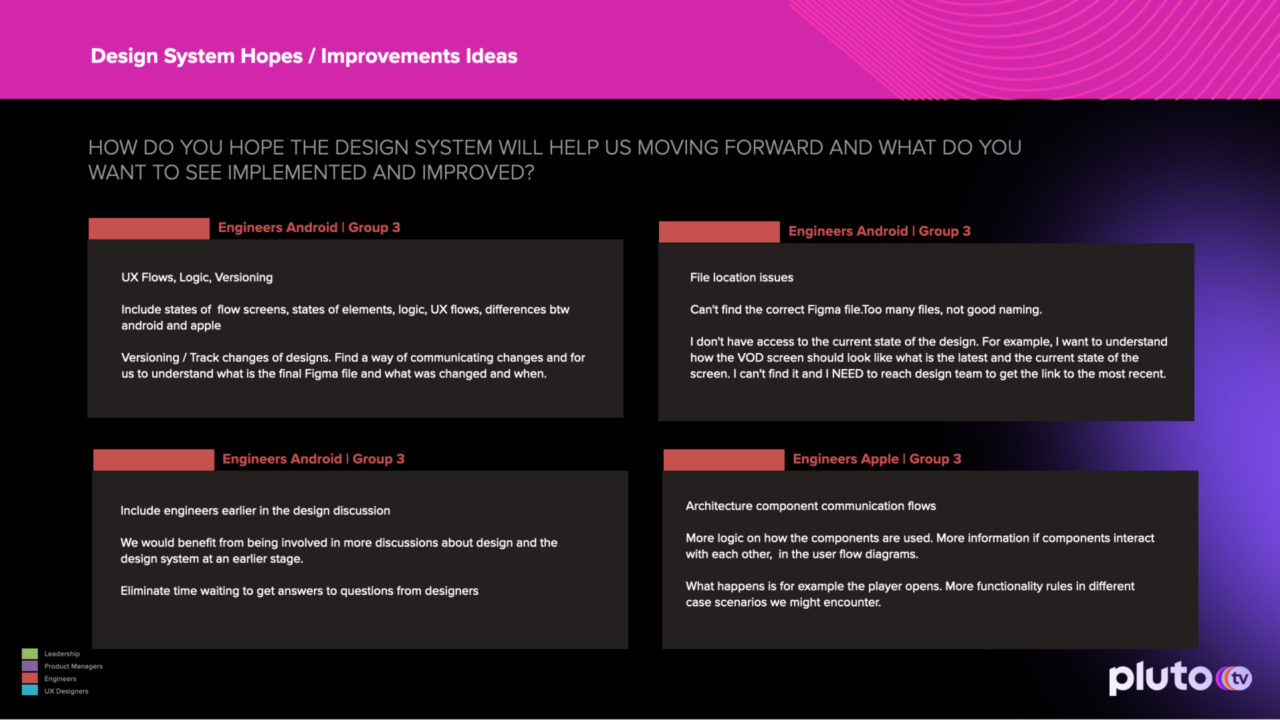
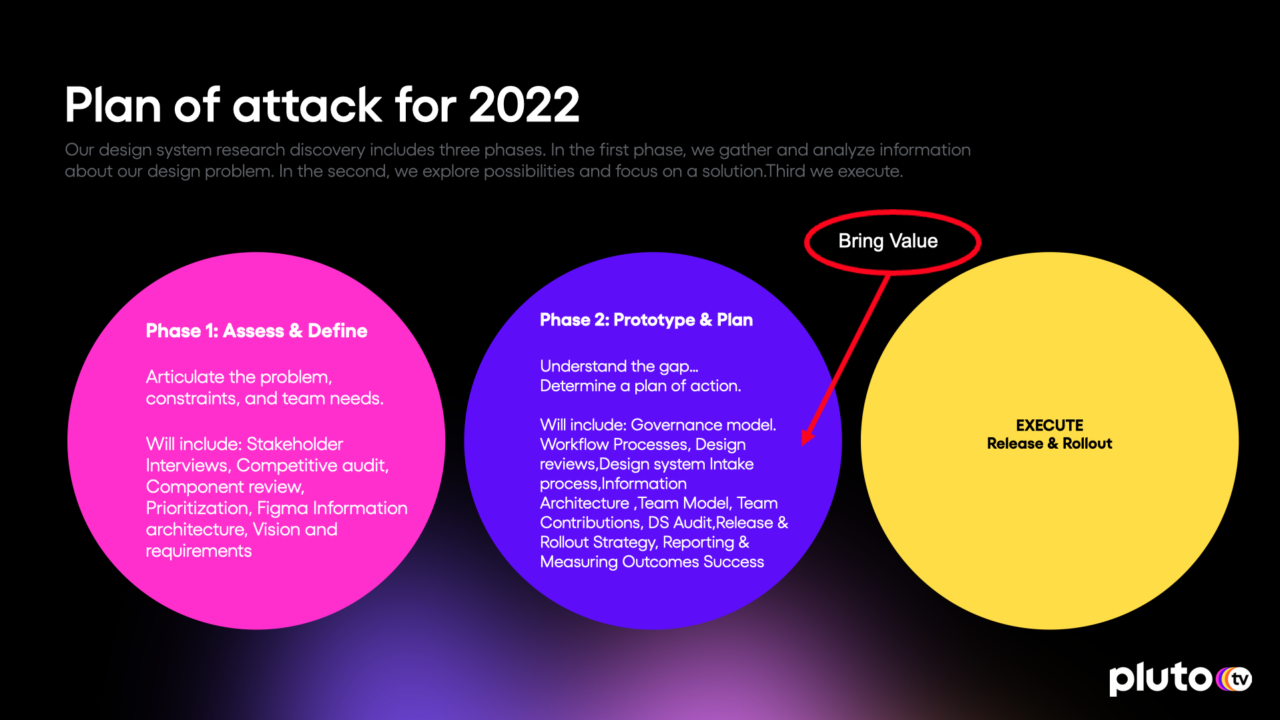
- Conducted Qualitative Research – Stakeholder Interviewing Research with 26 participants across 4 countries. Generated a report of my findings, documented the problem space, and provided solutions for resolving problematic issues. Shared and presented to the UX product team and all stakeholders involved.
- Organized and structured multiple Design System Workshops to define, prioritize and assign design system prioritization stack tasks.
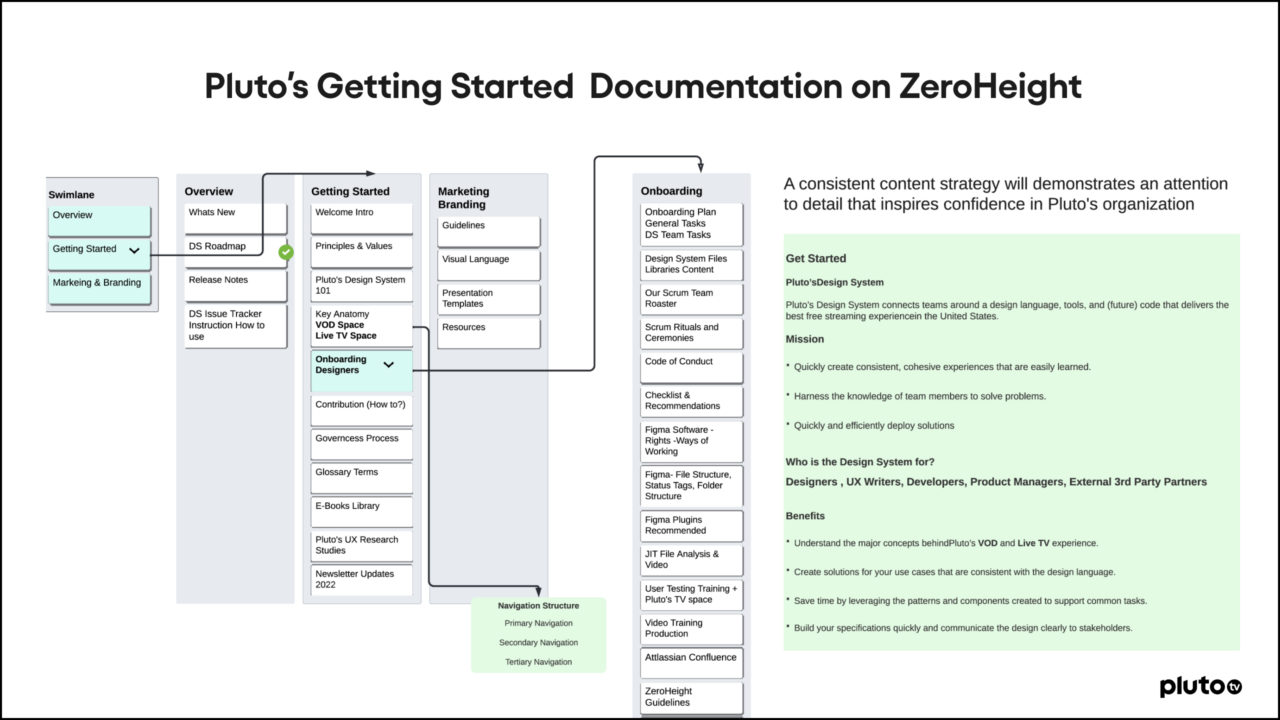
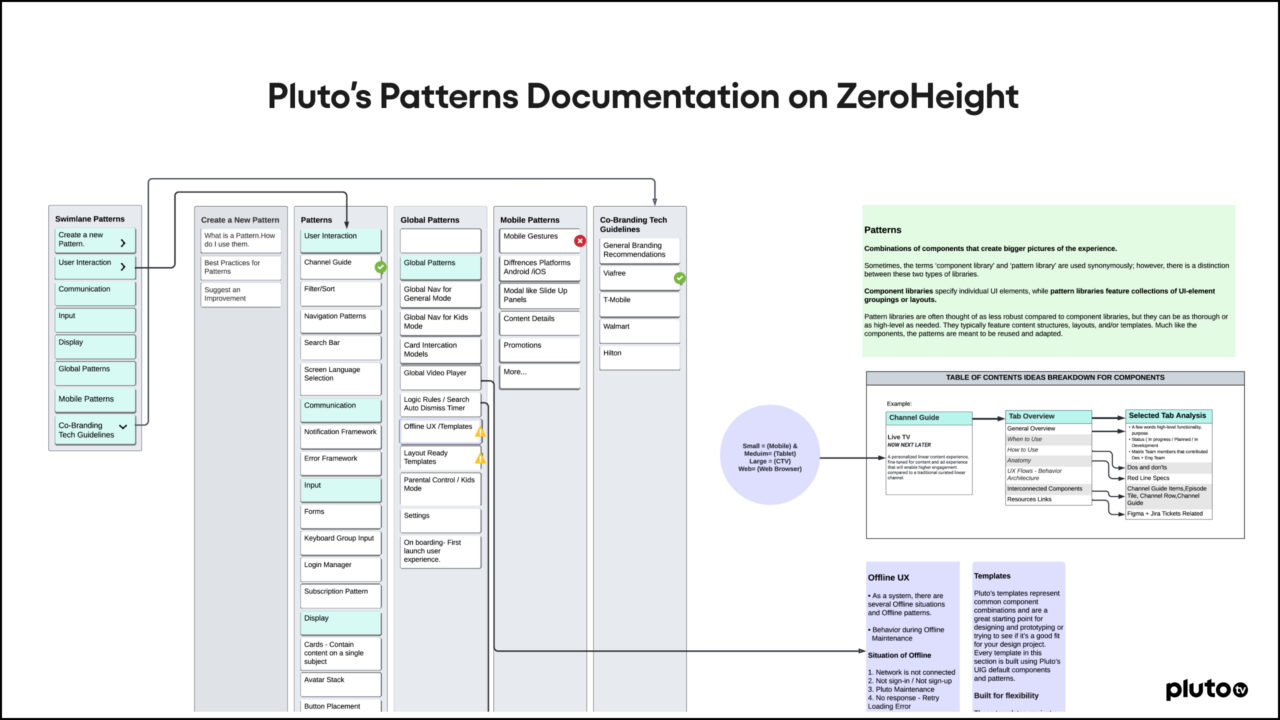
- Conducted extensive design system benchmarking and created and implemented an Information Architecture Diagram of our documentation platform ZeroHeight.
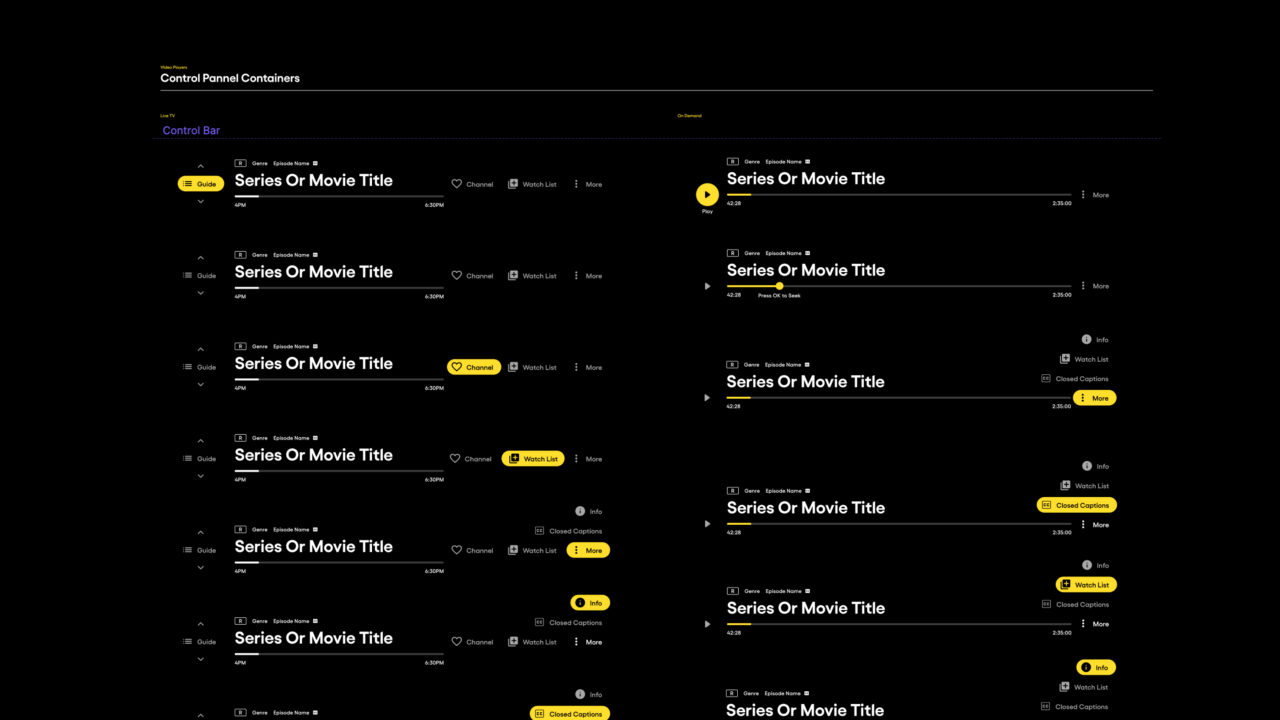
- Organized and conducted component interface inventory for connected TVs, Mobile, tablets, and web.
- Worked closely with the Accessibility team to create accessibility guidelines, workshops, training, accessibility forum.
- Daily communication and collaboration with dedicated design system designers in Re-structure Maintaining Style Guides, Pattern Libraries, Component Libraries.
- Assisted & Created Documentation: (Figma hands-on, ZeroHight)
- Re-Calibrated existing components, new component builds in Figma.
- Bug Component Triage: Removing out-of-scope issues, duplicates, or invalid components.And many more…